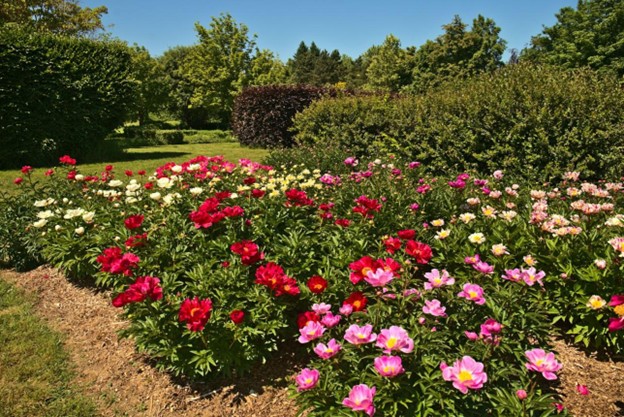
Peonies are one of the most reliable, long-lived perennials you can add to your garden. Not only are they beautiful, deer-resistant, and low-maintenance plants, they make excellent cut flowers, they increase in size and bloom count each year, and many species have a lovely fragrance.
Here’s how to grow them successfully.
Types of Peonies
There are three main categories, and choosing the right one matters:
- Herbaceous Peonies
-
- Most common garden type
- Die back to the ground each winter
- Bloom late spring to early summer
- Examples: ‘Sarah Bernhardt,’ ‘Karl Rosenfield’
- Tree Peonies
-
- Woody shrubs (do not die back)
- Larger, often more dramatic blooms
- Bloom earlier than herbaceous types
- Slower growing but very long-lived
- Intersectional (Itoh) Peonies
-
- Hybrid of herbaceous × tree peonies
- Strong stems (less flopping)
- Large blooms with extended bloom time
- More expensive but very high performance
When and Where to Plant
Peonies become very accommodated to where they are initially planted and do not like to be moved. Therefore, use care when selecting your peony’s planting location.
Best Time to Plant:
- Fall (September–October is ideal in most climates)
- Spring planting is possible but often delays blooming
Light Requirements:
- Full sun (6–8 hours daily)
- In hotter regions, light afternoon shade can help
Soil Conditions:
- Well-drained soil is critical
- Slightly acidic to neutral pH (6.5–7.0)
- Avoid heavy clay unless amended
How to Plant Peonies (This Is Crucial)
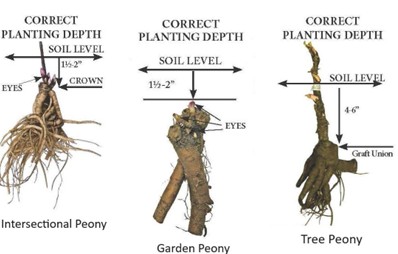
The most common reason peonies fail to bloom is planting them too deep.
- Dig a hole about 12–18 inches wide
- Mix in compost for drainage and nutrients
- Position the root so the “eyes” (buds) are:
- 1–2 inches below soil level (no deeper)
Backfill, water well, and mulch lightly (but not directly over the crown).
Watering and Feeding
- Watering:
- Moderate, consistent moisture
- About 1 inch per week during growing season
- Avoid soggy soil
- Fertilizing:
- Light feeder
- Apply balanced fertilizer (10-10-10) in early spring
- Avoid excess nitrogen (causes foliage, not flowers)
Support and Maintenance
- Staking:
- Large blooms can flop—use peony rings or supports early in the season
- Deadheading:
- Remove spent blooms to keep plants tidy
- Fall Care (Herbaceous types):
- Cut back to ground after frost
- Dispose of foliage (helps prevent disease)
Common Problems
- No Blooms
-
- Planted too deep (most common cause)
- Too much shade
- Recently transplanted (can take 1–3 years to establish)
- Flopping Flowers
-
- Heavy blooms + rain
- Fix: staking or planting sturdier Itoh varieties
- Botrytis (Gray Mold)
-
- Blackened buds or stems
- Improve air circulation and remove affected parts
- As a preventative measure, I routinely use Rose Rx. It’s a spray-on or a drench that you can get at most nurseries, Amazon, etc. I spray the peonies at the beginning of the growing season and every 2-3 weeks to keep the peonies (and my roses, hibiscus, etc..) healthy and looking great. I love it because it’s organic (largely neem oil) and friendly to beneficial insects.
Bloom Time & Extending the Season
Peonies don’t bloom long individually (7–10 days), but you can extend the overall season by planting a mix:
- Early bloomers
- Mid-season varieties
- Late bloomers
This can stretch your display to 3–4 weeks total.
Cutting Peonies for Indoors
For best vase life:
- Cut in early morning
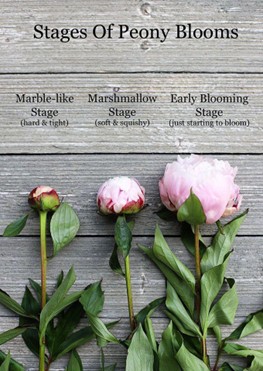
- Choose buds in the “marshmallow stage” (soft but not open)
- Place immediately in water
- Remove excess leaves below waterline
Vase life: 5–7 days (sometimes longer with proper care)
A Plant That Becomes Part of the Family
One of the most remarkable—and often overlooked—qualities of peonies is their longevity.
Most peonies can live and bloom for 50 years or more, often outliving the gardener who planted them. Because of this, peonies make extraordinary generational gifts.
They’re not just plants, they’re living heirlooms.
- A peony planted for a wedding or special occasion can bloom every anniversary
- A division shared from a grandparent’s or a love one’s garden can carry their memory forward
- A plant gifted to a new home can become part of that family’s story
Unlike cut flowers or even many shrubs, peonies deepen in meaning and beauty as they age. Each year they return a little fuller, and a little more established, often mirroring the special relationships they often symbolize or represent.
If you’re looking for a meaningful, lasting gift, a peony is one of the rare botanical legacies that truly grows more valuable over time.
Final Takeaway
Peonies are not difficult—but they are particular.
If you:
- Plant them at the correct depth
- Give them sun and drainage
- Leave them alone to establish
…they will reward you with decades of blooms.
They’re one of the rare plants where doing less (but doing it correctly) leads to better results.
Have a great week.
Pam