
If your hummingbird feeder suddenly seems a little busier, and considerably less civilized, you’re not imagining things.
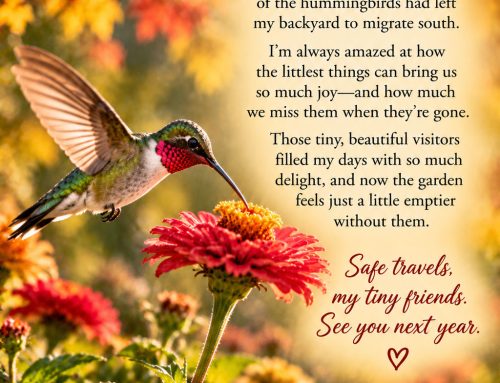
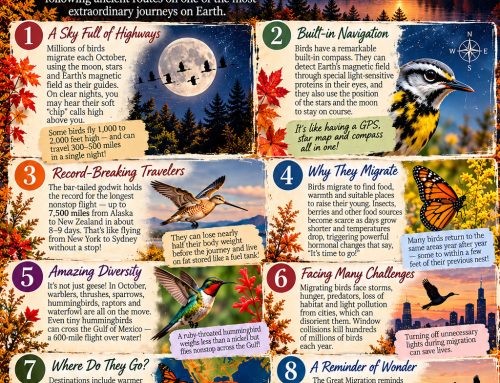
August and September are important months for hummingbirds. Across much of eastern North America, Ruby-throated Hummingbirds are beginning to prepare for their fall migration. Adult males generally start heading south first, followed by females and then the young birds. At the same time, hummingbirds from farther north begin passing through, so the bird defending your feeder today may not be the same one you were watching a few weeks ago.
And they are hungry.
Welcome to Hyperphagia
Before migration, hummingbirds enter a period of hyperphagia, essentially, an intense drive to eat and build the fat reserves needed for the journey ahead.
For a bird that weighs about as much as a few pennies, that journey is remarkable. Ruby-throated Hummingbirds travel hundreds or even thousands of miles to wintering grounds in Mexico and Central America, and some make the famous nonstop flight across the Gulf of Mexico.
So those frantic visits to flowers and feeders aren’t simply hummingbirds being greedy. They’re fueling one of nature’s most extraordinary migrations.
And Then There Are the Bullies
Of course, hummingbirds aren’t particularly interested in sharing the buffet.
One bird may decide that your feeder – and apparently the surrounding airspace, patio furniture, flower bed, and possibly your entire property—belongs exclusively to them.
Cue the chasing.
Hummingbirds can be surprisingly territorial around rich food sources, and late summer can turn a peaceful feeder into something resembling a very tiny aerial combat zone. The dramatic dives, squeaks, chases, and midair confrontations may look alarming, but they’re normal hummingbird behavior.
If one particularly ambitious little dictator has taken control, try hanging several feeders out of sight of one another. A single bird has a much harder time defending food it can’t see.
How We Can Help
This is actually one of the most useful times of year to keep hummingbird feeders available.
Use the standard recipe of one part plain white sugar to four parts water, nothing else. No red dye, honey, artificial sweeteners, or stronger “energy-boosting” mixtures are necessary. Keep feeders clean and change the solution frequently, particularly during hot weather when sugar water can spoil quickly.
And don’t take your feeder down because you’re worried the hummingbirds won’t leave.
That’s a persistent myth.
Feeders don’t prevent migration. Shortening daylight and other biological cues tell hummingbirds when it’s time to go. In fact, keeping a feeder available after your regular birds disappear may provide a valuable refueling stop for migrants arriving from farther north. A good rule is to leave your feeders up for several weeks after you see your last hummingbird.
Late-blooming nectar plants are another wonderful way to help. A garden that continues flowering into September provides migrating hummingbirds with natural places to stop, feed, and recharge.
A Celebration of Hummingbird Migration
If you’d really like to appreciate the scale of this migration, there’s an entire festival devoted to it.
Each September, Rockport-Fulton, Texas—a major stopover along the migration route—hosts the HummerBird Celebration as hummingbirds stream through the region on their journey south. The celebration includes birding trips, hummingbird home tours, public bird banding, photography programs, speakers, and other events centered around these remarkable little travelers.
So over the next several weeks, spend a little extra time watching your feeders. The hummingbirds darting through our gardens may be eating furiously, chasing one another, and behaving as though they personally own the place. But behind all that tiny-bird bravado, something extraordinary is happening. They’re preparing for a journey that will carry some of them hundreds—or even thousands—of miles south.
Sometimes wonder unfolds slowly and gently. And sometimes it arrives on tiny wings at 50 miles an hour.