There was a little excitement at my house this morning—my first monarch caterpillar became a chrysalis!
This little adventure began on August 4, when I received a dozen or so monarch larvae that I had ordered from Monarch Watch. I have no affiliation with Monarch Watch and receive no compensation from the organization, but I have found them to be a reputable resource for monarch education, conservation, and healthy monarch-rearing practices.
The caterpillars arrived in tiny, capped containers with a specially prepared nutrient medium to sustain them during their earliest stage of development. At only about 1–2 millimeters long, the larvae were so tiny they were barely visible to the naked eye. I then transferred them to a butterfly-rearing tent (I purchased mine from Amazon) and began supplying them with plenty of fresh milkweed from my garden.
But here’s the super important thing you absolutely need to know:
HAVING AN AMPLE, PESTICIDE-FREE SUPPLY OF MILKWEED IS CRITICAL.
Milkweed is the only host plant monarch butterflies use for their eggs and the only plant their caterpillars can eat. Adult monarchs can drink nectar from many different flowers, but their babies depend entirely on milkweed. And once those caterpillars get bigger, they eat an astonishing amount of it!
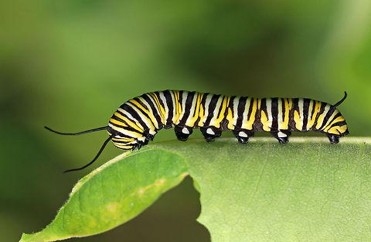
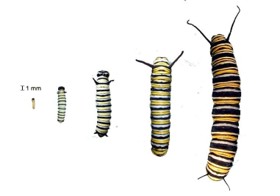
Monarch caterpillars pass through five developmental stages called instars. Most of my caterpillar larvae were at their first instar when they arrived. Here’s what the caterpillars look like at the various instar stages:
| Instar | Size | What to Look For |
| 1st | 2–6 mm | Tiny, pale; stripes barely visible. |
| 2nd | 6–9 mm | Stripes and small tentacles appear. |
| 3rd | 10–14 mm | Distinct black, white & yellow bands. |
| 4th | 13–25 mm | Larger, boldly striped; longer tentacles. |
| 5th | 25–45+ mm | Big, plump and unmistakable—and very hungry! |
Between each stage, they molt, shedding their old skin as they grow. In just a couple of weeks, a caterpillar can go from almost too small to see to a plump, roughly two-inch-long milkweed-eating machine.
Then comes the really extraordinary part.
At the end of the fifth instar, the caterpillar stops eating, finds a suitable place, attaches itself with a small pad of silk, and hangs upside down in its characteristic J-shape. Eventually it sheds its skin one final time, revealing the beautiful jade-green chrysalis underneath.
And that’s where my first little monarch is this morning.
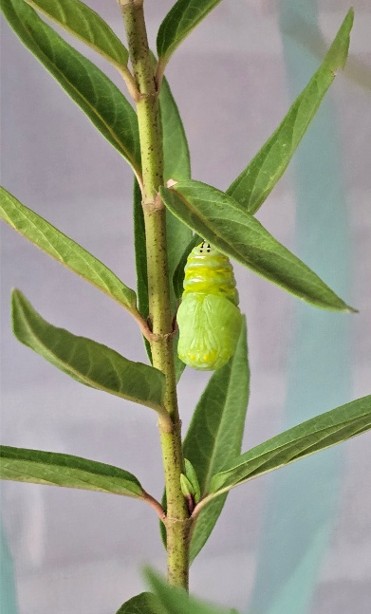
Inside that tiny green chrysalis, one of nature’s most remarkable transformations is underway. In roughly 8–15 days, depending on conditions, an adult monarch butterfly should emerge.
For now, I’m watching the others eat their way through what seems like half my milkweed garden and waiting for the next little green chrysalis to appear.
I’ll keep you posted.